Diwali, in simple terms, is the Indian equivalent of Christmas, New Year’s Eve and a nationwide home makeover, all rolled into one glittering celebration. It marks the triumph of good over evil, light over darkness and, in my particular case, optimism over common sense.
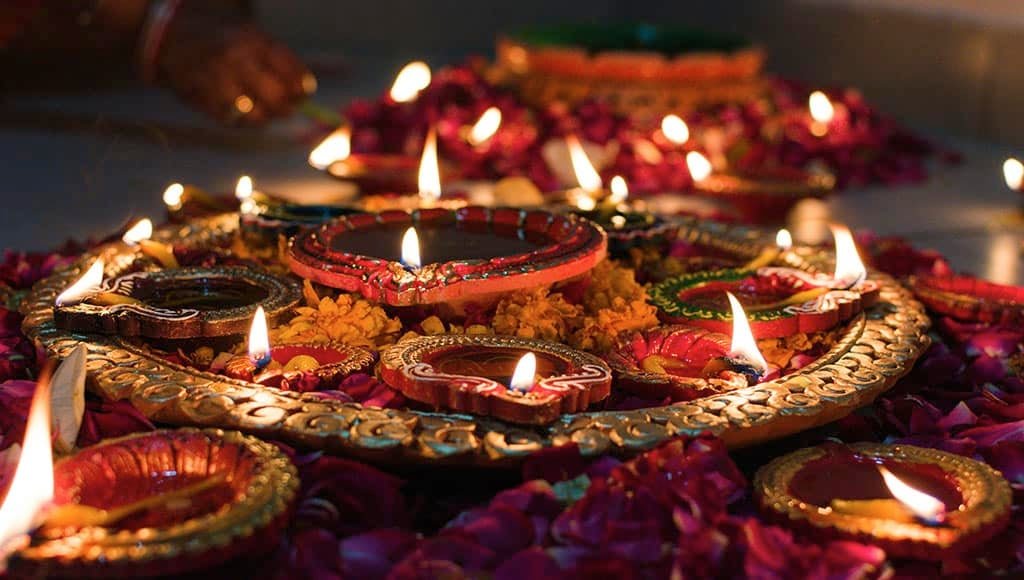
The word Diwali comes from Deepavali, meaning a row of lamps. Customarily, little oil lamps are lit to welcome prosperity and invite Lakshmi, the goddess of wealth, into our homes. Which is rather lovely, because who wouldn’t appreciate a divine intervention in their finances? Particularly in Portugal, where the cost of living appears to have developed ambitions of its own.
Preparations for this auspicious day begin with a thorough spring clean, where every cupboard is emptied, every surface polished and each forgotten corner vacuumed. The reasoning is that the goddess of wealth prefers a clean house. I do too but this is the only religious instruction that makes me panic because Lakshmi does not visit untidy homes, which explains a great deal about my bank balance. Every year, I dust the bookshelves, find a novel I lost in, say, 2014, sit down to read it, and the goddess glides right past my dwelling.
Legend also says that Diwali commemorates Lord Rama’s return home after 14 years in exile and victory over the demon king Ravana. Other traditions associate the festival with the beginning of a prosperous new year. So, the details differ, but the underlying theme of hope, renewal and the victory of light over darkness remains the same.
Therefore, homes sparkle with fairy lights, doorways are decorated with colourful patterns, and tiny lamps flicker on windowsills. Having made Portugal home and travelled frequently to other parts of the world, I have come to appreciate that festive illumination is a universal language. The only difference is that some people use a tasteful string of lights, while others appear to be auditioning their houses for a starring role in a celestial extravaganza.
Food is another essential feature during Diwali, where tables groan beneath dozens of savoury delicacies and exquisite little sweets, and everyone is fed and fed till they are quite fed up. Then there is rangoli, those colourful powder patterns made on the doorstep to welcome guests. In Lourinhã, the Atlantic wind delivers mine to Spain by lunchtime, but here I digress.
Families try to stay connected. In our case, our only daughter is settled in England with our son-in-law and two grandchildren, leaving our nest quite empty. Consequently, festive celebrations require a certain amount of international diplomacy, with discussions about flights, negotiations over visiting dates, and the perennial question of who is going to travel where during Diwali. In other words, it is ‘muito complicado’, like they say here in Portugal.
Meanwhile, last Diwali, I had just finished lighting up our house when my husband stepped into the balcony. It was glowing like a landing strip.
“Are you expecting a plane to land here?” he asked.
“No, just a Goddess,” our granddaughter said.
“Mum is simply making sure,” our daughter added.
“She should not miss our house this time,” I insisted.
“She won’t. She can’t,” our son-in-law laughed.
“Happy Diwali everyone,” our grandson lisped.
Read Nickunj Malik’s last month’s article: The pursuit of happiness