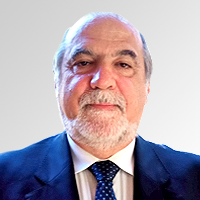
Osvaldo Ngoloimwe spoke to the press at the conclusion of a seminar organized by the SNCP aimed at technical reflection, standardization of procedures, and reinforcement of good practices in public procurement for institutional officials, technicians, and sector specialists.
The director-general of Angola’s National Public Procurement Service (SNCP) stated on Monday that the Government will be “more assertive” in controlling public contracts, with sanctions that may lead to the blocking of expenditures from Budget Units (UO).
Osvaldo Ngoloimwe emphasized the commitment to enhance control over expenses, underscoring that responsibilities will be assigned to top managers to “ensure better expenditure oversight.”
He pointed out that several challenges contribute to the misalignment between actions and compliance with public procurement laws in Angola, including “habits” stemming from the past.
“We must recognize that the first public procurement legislation in our country dates back to the colonial era. Over time, due to the armed conflict, we have developed a lack of culture surrounding this subject, leading to a common understanding that public procurement is merely an exercise of contract signing and invoice receipt,” he stressed, highlighting the need to change this paradigm.
“Public procurement involves planning, following procedures, and executing contracts efficiently. Fortunately, we have observed some changes and progress over the years,” he added.
During the meeting, Osvaldo Ngoloimwe warned Angolan administrative agents that once March is reached, if expenditure blocking from UOs occurs, only salary payments will remain viable. “Everything else will not be feasible,” he emphasized.
According to the director-general of the SNCP, another measure to be implemented this year stipulates that for all contracts valued at or above 182 million kwanzas (approximately 168 thousand euros), a security deposit will be required from the contracted company to cover damages in case of non-compliance.
Osvaldo Ngoloimwe noted that all expenditures must strictly adhere to the legal framework, adding that starting in 2024, the Angolan Government will initiate a process to evaluate companies whose contracts have resulted in losses to the State, leading to more than fifty companies being barred from contracting with the Government due to non-compliance.
“We have a total of 53 companies. This serves as an indicator of ‘performance’, which should lead us to two criteria: the level of seriousness of economic operators and to what extent signing a contract with the Government is a matter of great responsibility.”
The SNCP director-general deemed it premature to mention specific figures regarding losses, citing the dynamic nature of the process—some companies that were previously barred have already rectified their debts to the State and thus have been removed from the list.
From February 22 to March 25, SNCP teams will conduct training sessions nationwide to promote efficient and transparent public procurement, the official announced.
This initiative, attended by Jorge Augusto, the vice-governor for the economic sector of the Provincial Government of Luanda, was directed towards directors of the Study, Planning, and Statistics Office (GEPE), legal offices, as well as municipal administrators responsible for financial matters in Angola’s capital.